
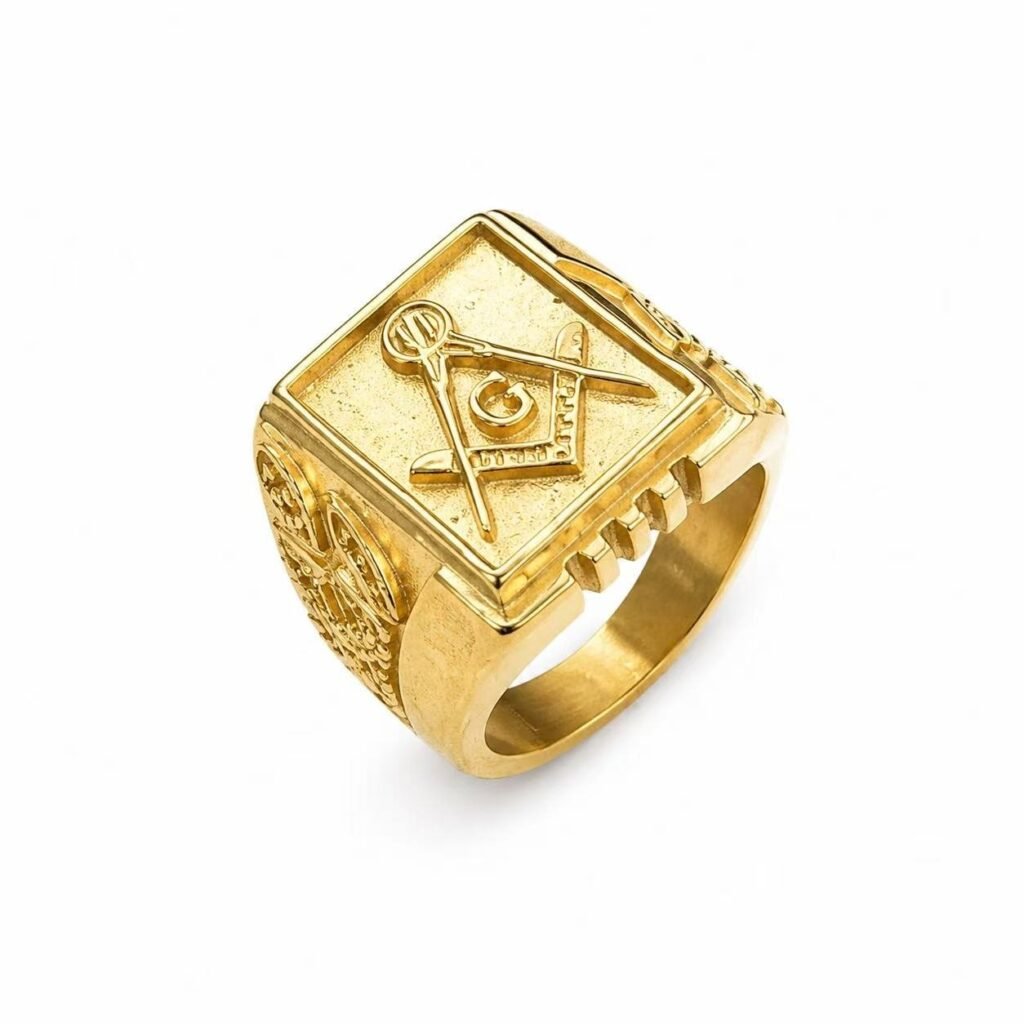
PVD gold stainless steel jewelry wholesale orders are not defined by color alone. Two pieces can both be described as “gold PVD” while differing in base metal, surface preparation, coating system, shade, polishing, edge coverage and batch consistency. For a wholesaler or private-label brand, those differences affect product positioning, customer expectations, inspection and repeat-order risk.
The most useful sourcing process begins with a written specification rather than a general request for “waterproof gold jewelry.” Buyers should confirm what the product is made from, which gold tone is required, how the approved sample will be recorded, what the jewelry is expected to withstand and how the factory will check the bulk order.
This guide explains how to compare PVD gold stainless steel jewelry suppliers, prepare an accurate quotation request and connect finish decisions with MOQ, quality control, packaging and target-market requirements.
What Is PVD Gold Stainless Steel Jewelry?
Physical vapor deposition, commonly shortened to PVD, is a vacuum-based coating process used to deposit a thin decorative and functional layer onto a prepared surface. In stainless steel jewelry, PVD can be used to create gold, rose gold, black, gunmetal and other finish directions.
PVD describes the coating method, not a complete product specification. A wholesale buyer still needs to confirm:
- the stainless steel grade used for the jewelry body;
- the surface finish before coating, such as mirror polished, brushed or textured;
- the requested color reference;
- whether the design includes one color or masked two-tone areas;
- the intended wear conditions and target market;
- the agreed sample and bulk inspection method.
GZN Jewelry works with stainless steel jewelry programs across rings, pendants, necklaces and other categories. Buyers comparing material options can first review the 316L vs 304 stainless steel jewelry guide. The suitable grade and finish should be confirmed for each product instead of assumed from a category name.
PVD Coating and Conventional Electroplating Are Not Interchangeable Terms
Buyers often ask whether PVD is “better” than electroplating. That question is too broad unless the product, coating system, preparation and test conditions are defined.
| Comparison point | PVD coating | Conventional electroplating |
|---|---|---|
| Process environment | Vacuum deposition | Electrochemical bath |
| Common jewelry use | Gold, rose gold, black and other durable finish programs | Decorative metal layers and a wide range of color or material effects |
| Result depends on | Cleaning, surface preparation, coating system, geometry and process control | Cleaning, strike or base layers, bath control, layer structure and process control |
| Buyer should confirm | Color target, substrate, finish, sample standard and agreed testing | Plating stack, color target, substrate, sample standard and agreed testing |
Neither process should be judged only by the word used in a product title. A well-controlled finish begins with the substrate and preparation. Poor polishing, contamination, sharp edges or inconsistent pretreatment can affect the appearance and performance of any coating system.
For B2B purchasing, request a complete process description that is appropriate for the order. Do not rely on unsupported claims such as “never fades” or “100% waterproof.”
Define the Gold Color Before Requesting a Quote
“Gold” is not one universal color. Wholesale collections may use pale champagne, yellow gold, warm gold, rose gold or antique gold directions. Even when sellers use terms such as 14K gold color or 18K gold color, those terms may describe appearance rather than the purity of a deposited precious-metal layer.
To avoid misunderstandings, provide one or more of the following:
- An approved physical sample.
- A dated color reference photographed under controlled lighting.
- A supplier color card with the selected code.
- A written description of polished, brushed, matte or antique treatment.
- Clear instructions for two-tone masking and uncoated areas.
The quotation and sample record should state whether the term refers to color only or to a specified coating composition. This distinction matters for product descriptions, compliance documents and customer communication.
What Affects Color Retention?
Color retention is influenced by a system of factors rather than one marketing phrase. Important variables include:
Base Material
The stainless steel grade, forming method, soldered areas and surface condition can affect preparation and coating. Buyers should confirm the material for the exact SKU, especially when one collection includes rings, chains, cast pendants and assembled parts.
Surface Preparation
Polishing lines, pits, oil, dust and handling marks can remain visible after coating. Mirror-polished jewelry and brushed jewelry require different visual standards. The approved sample should define acceptable surface appearance before the gold finish is evaluated.
Product Geometry
Deep recesses, sharp edges, chain joints, moving parts and stone settings may coat or wear differently from large flat surfaces. Inspection should pay attention to high-contact areas rather than checking only the center of the product.
Wear and Care Conditions
Sweat, friction, cosmetics, cleaning chemicals, swimming environments and storage conditions can influence appearance over time. A factory should not promise a universal lifetime without defined conditions. Buyers should align care instructions with the intended customer and retail channel.
Batch Control
Color can appear different under warm retail lighting, daylight and photography lights. Bulk inspection should compare production against the approved sample using consistent lighting and a documented acceptance method.
For a broader view of production checks, see the Factory Tour and Quality Control page.
Build the Sample Standard Before Bulk Production
A useful sample is more than a design preview. It should become the reference for production and inspection.
Before approving the sample, record:
- product code and revision date;
- stainless steel grade;
- dimensions and weight tolerance where relevant;
- surface finish before coating;
- approved PVD gold shade;
- logo position and engraving depth;
- stone, enamel or assembled component details;
- size range and fit standard;
- packaging method;
- test requirements agreed for the project.
Photographs are useful, but a retained physical sample is stronger for comparing gold tone, polishing and tactile quality. For repeat orders, keep the original approval record and note any process or supplier changes.
How to Control PVD Gold Color in Bulk Orders
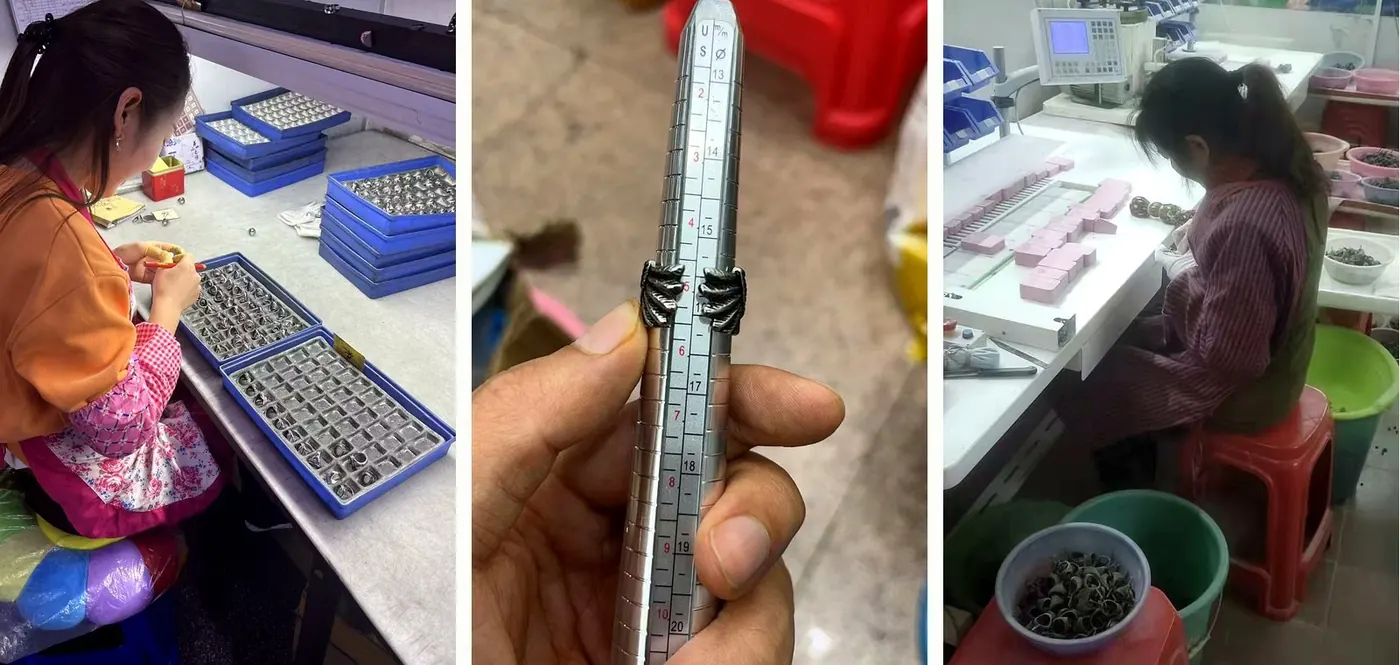
Bulk inspection should be organized around the risks of the specific design. A practical checklist can include:
Visual Inspection
- Compare gold shade with the approved sample under consistent lighting.
- Check for exposed base metal, uneven areas, stains, scratches and handling marks.
- Inspect recesses, edges, inside ring surfaces, chain links and moving components.
- Confirm that polished, brushed or matte areas match the specification.
Dimension and Function
- Measure ring sizes, chain lengths, pendant dimensions and closure fit.
- Check clasps, hinges, jump rings and assembled parts.
- Confirm that stones, enamel and glued components are secure where applicable.
Batch Consistency
- Compare pieces from different trays, production lots or cartons.
- Separate unacceptable shade differences before packing.
- Confirm SKU, size and color labels against the order sheet.
Packaging Protection
- Prevent pieces from rubbing against each other during transport.
- Use suitable individual bags, cards, pouches or boxes according to the product.
- Confirm barcode, carton mark and private-label instructions before final packing.
The inspection method and sampling level should be agreed before production. A generic claim of “100% QC” does not explain what was checked or which defects are acceptable.
Testing Should Match the Product and Market
Wholesale buyers may request coating, corrosion, sweat, abrasion, adhesion or restricted-substance testing. The correct test plan depends on the product construction, intended use, destination market and retailer requirements.
A test result should identify the sample tested, method, laboratory, date and acceptance criteria. Results from a different product or an earlier batch may provide background information but should not automatically be presented as proof for every SKU.
Buyers selling into regulated or retailer-controlled markets should share their restricted-substance list and documentation requirements before quotation. GZN’s RSL Testing and Jewelry Compliance page explains how material and market requirements can be discussed for a project.
What Changes MOQ and Wholesale Price?
There is no responsible universal MOQ or price for all PVD gold stainless steel jewelry. The quotation can change according to:
- ready-stock versus made-to-order production;
- existing mold versus new custom tooling;
- product size, weight and complexity;
- stainless steel grade and component structure;
- one-color versus masked two-tone coating;
- polishing, brushing, enamel, stone setting or assembly;
- quantity per design, color and size;
- logo engraving and private-label requirements;
- testing, inspection and documentation;
- individual packaging and carton preparation;
- delivery destination and trade term.
Low quantities may be practical for selected existing styles, while custom molds, special finishes and private-label production usually need a project-specific review. Buyers should ask the supplier to separate sample cost, tooling, unit price, packaging, testing and freight instead of comparing only one unit-price number.
For custom development, review the OEM/ODM manufacturing services and send the design, target quantity and finish reference before requesting a final quote.
Plan a PVD Gold Collection Around Real Product Roles
A wholesale collection is easier to test when each SKU has a commercial role.
Core Rings
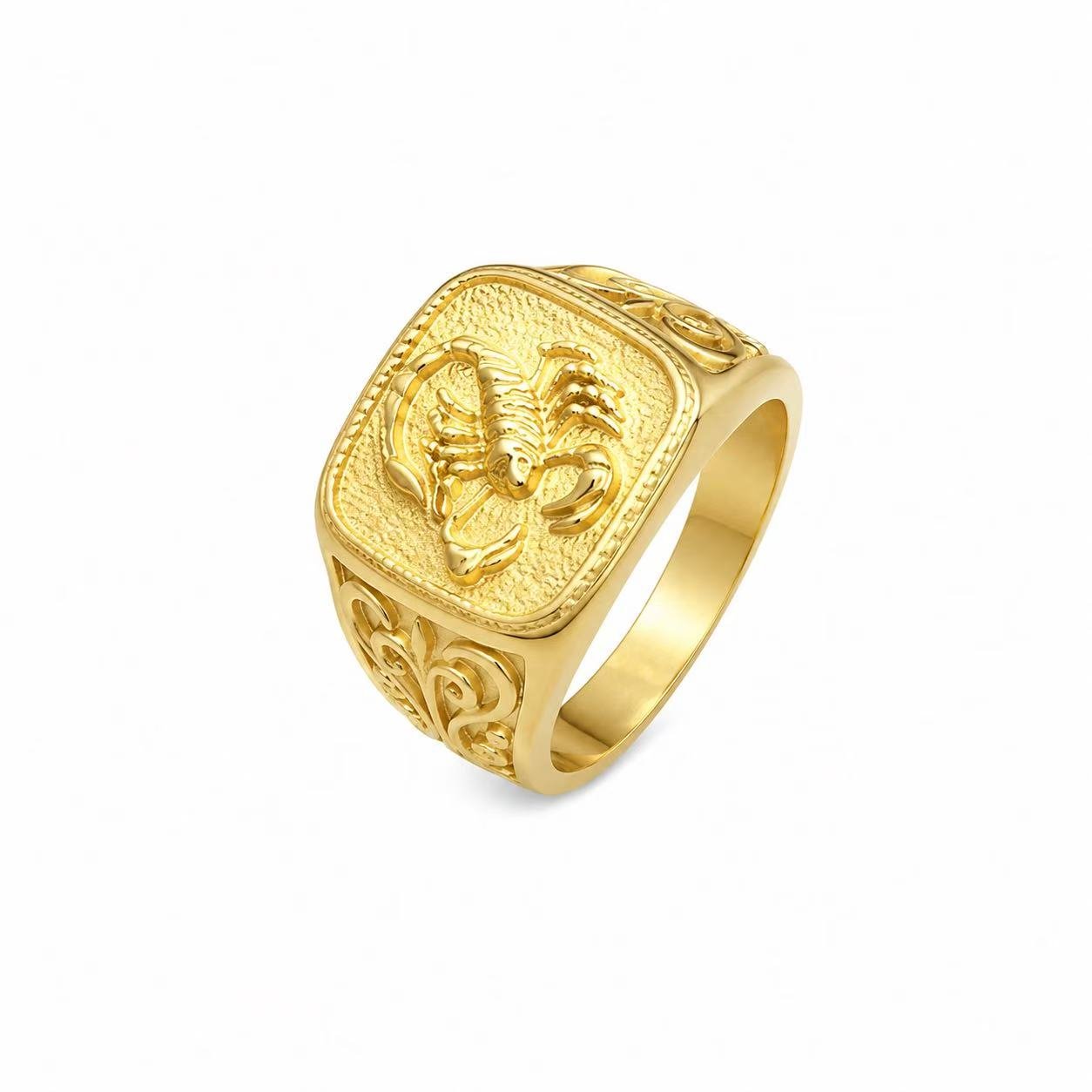
Signet rings, symbolic rings and simple bands can provide different price and style positions. Review the stainless steel rings wholesale category and compare products such as the Gold Masonic Compass Stainless Steel Signet Ring and Gold Scorpion Stainless Steel Signet Ring.
Statement Pendants
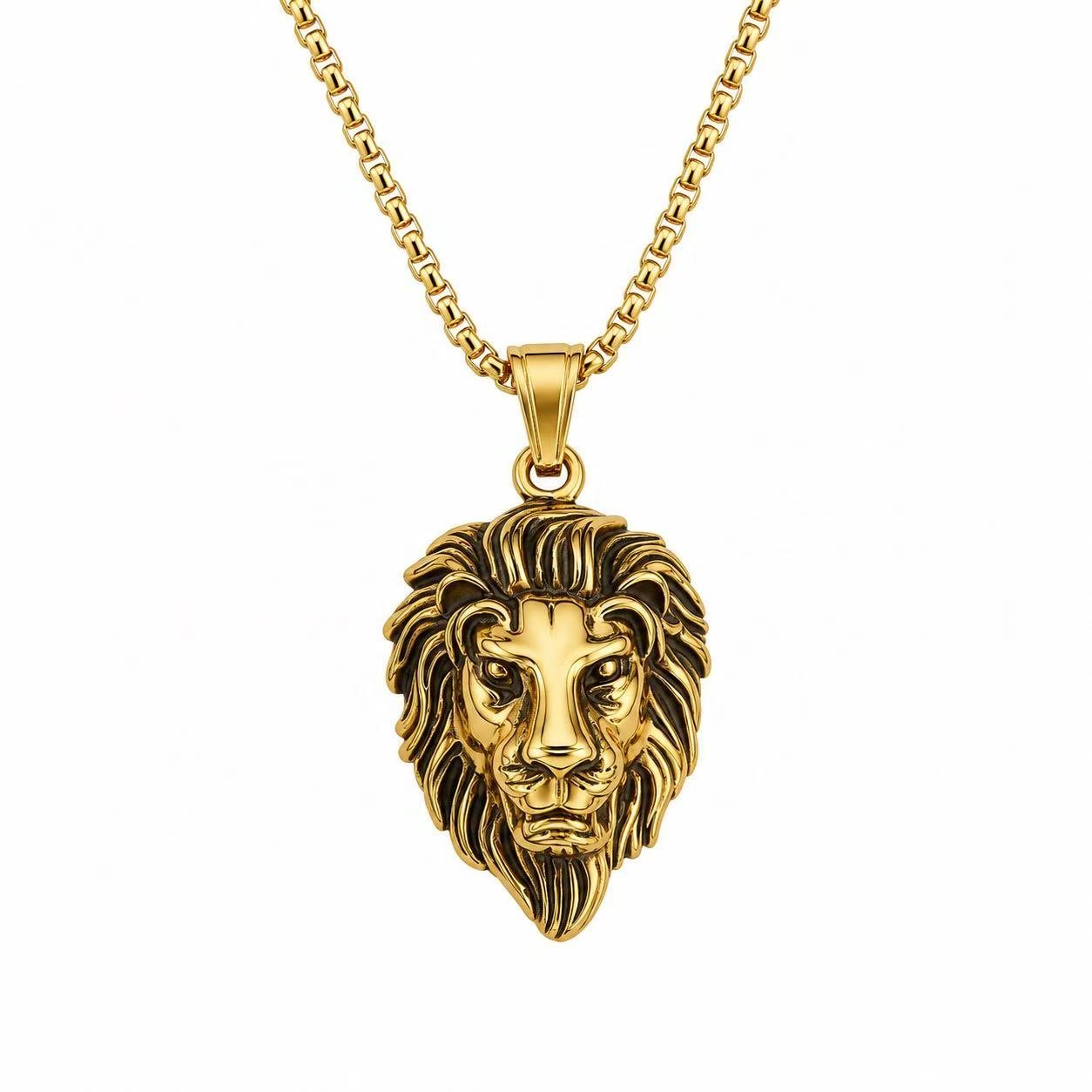
Gold-tone pendants can give a collection a stronger visual anchor. Buyers can review the Gold Lion Head 316 Stainless Steel Pendant and compare its size, chain requirement, finish and packaging with the target market.
Repeatable Basics
Simple bands, chains and smaller pendants can support repeat purchasing when sizes, finish and SKU labeling remain consistent. A first order does not need to contain every category. It should test a manageable group with a documented reorder plan.
How to Compare PVD Gold Stainless Steel Jewelry Suppliers
Use evidence that relates to the exact project. A supplier comparison should cover:
- Product fit: Does the factory regularly produce the required ring, pendant, chain or assembled style?
- Material clarity: Can the supplier confirm the base material for each SKU?
- Finish control: Is there a defined color sample and bulk comparison process?
- Sampling: Can the supplier provide a dated approval sample before bulk production?
- MOQ structure: Are ready-stock, existing-style customization and full OEM quantities explained separately?
- QC visibility: Are inspection points, defect handling and packing checks written down?
- Compliance discussion: Can the supplier review buyer-specific RSL and test requirements?
- Repeat-order control: Can product codes, color references and packaging instructions be retained for reorders?
- Communication: Are revisions, costs and lead-time changes confirmed in writing?
A polished product photo is not enough to answer these questions. The buyer needs a traceable specification, approved sample and quotation that clearly identifies what is included.
What to Send for an Accurate Factory Quote
Prepare the following information before contacting a PVD gold stainless steel jewelry supplier:
- product links, drawings or reference images;
- target category and number of designs;
- stainless steel grade if already specified;
- gold color and surface-finish reference;
- quantity per design, color and size;
- logo, engraving or custom mold requirements;
- packaging, barcode and labeling needs;
- destination country;
- preferred trade term, such as EXW, FCA, FOB, DAP or DDP for discussion;
- required sample date and target bulk-delivery window;
- testing, inspection or documentation requirements.
Trade terms allocate different costs, responsibilities and risks. They should be quoted with a named place or destination and reviewed for the actual transport route. A short code without a named location is not a complete shipping agreement.
Frequently Asked Questions
Is PVD gold stainless steel jewelry waterproof?
Stainless steel and PVD finishes can be suitable for many daily-wear products, but “waterproof” is too absolute without defined construction, coating, exposure and test conditions. Buyers should agree on intended use, care guidance and project-specific testing instead of relying on a universal promise.
Does PVD gold jewelry never fade?
No supplier should make an unlimited claim without conditions. Appearance over time depends on the substrate, surface preparation, coating system, friction, chemicals, sweat, storage and customer use. Ask for a defined sample and testing plan.
Is every gold-color PVD coating made with 18K gold?
Not necessarily. “18K gold color” may describe a shade rather than the purity of a precious-metal layer. The quotation and product specification should state exactly what is being supplied.
What is the MOQ for PVD gold stainless steel jewelry wholesale?
MOQ depends on whether the order uses ready stock, an existing design, a custom color, private-label packaging or a new mold. Send the product and quantity breakdown for a project-specific answer.
Can one order include different gold-tone rings and pendants?
Mixed-style orders may be possible for selected existing products. Custom production is normally reviewed by design, color, size and process because each combination affects production planning and cost.
How can a buyer reduce color differences between sample and bulk production?
Approve a physical sample, record the color and surface finish, use consistent comparison lighting, retain the reference and inspect pieces from across the production batch rather than one carton only.
What documents should a wholesale buyer request?
The required documents depend on the destination market and retailer. Buyers may need a material declaration, project-specific test report, packing list, commercial invoice or other shipment documents. Confirm requirements before production.
Request a PVD Gold Stainless Steel Jewelry Quote
GZN Jewelry supports wholesale and OEM/ODM discussions for stainless steel rings, pendants, necklaces and private-label projects. To receive a useful quotation, send the product reference, quantity per design and size, gold color, logo, packaging, destination and any required inspection or compliance details.