
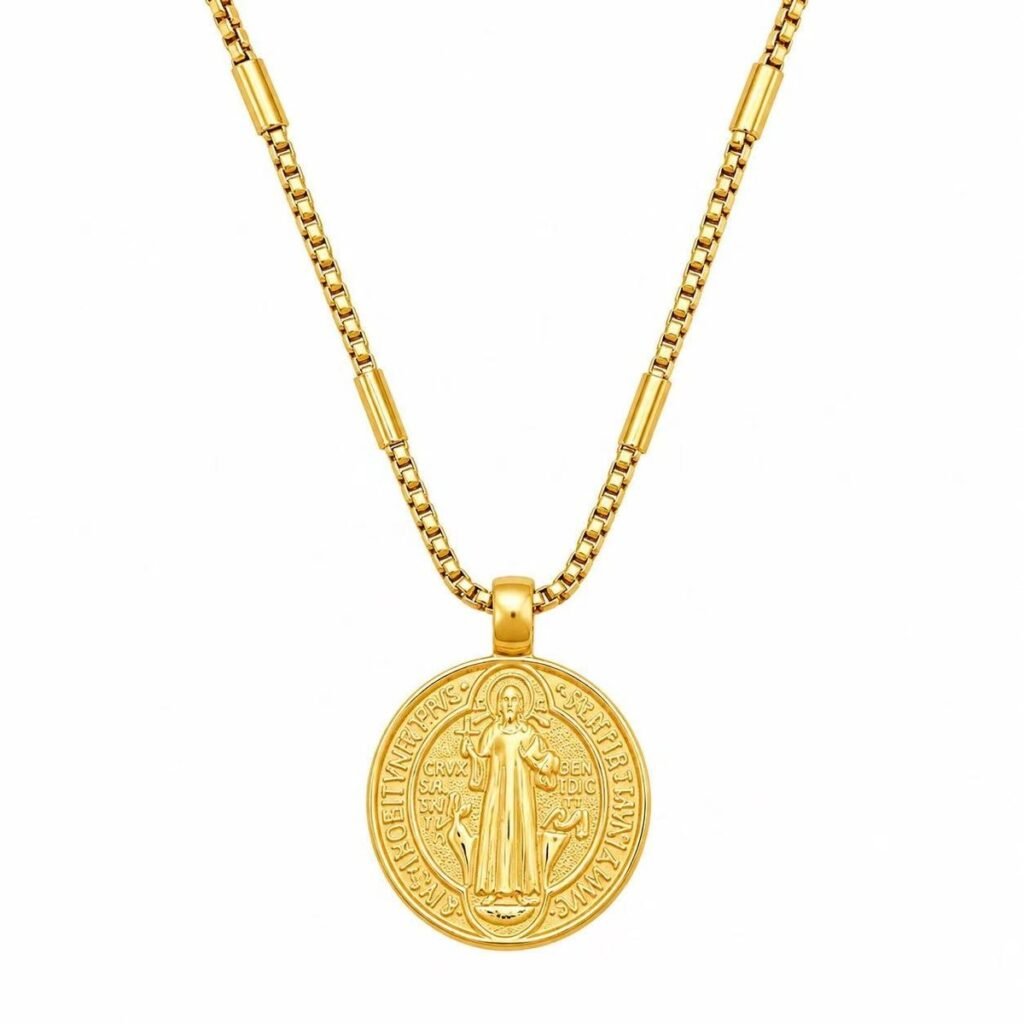
Catholic jewelry wholesale buying requires more than selecting attractive crosses and medals from a supplier catalog. A commercially useful range must match the retailer’s customer, represent each devotional image accurately, use clear material and finish specifications, and remain practical to inspect and reorder.
This guide is for religious gift retailers, jewelry wholesalers, private-label brands and importers sourcing stainless steel Catholic rings, pendants and necklaces. It focuses on assortment planning, symbol approval, samples, MOQ, quality control and packaging. It does not provide religious instruction, and a manufacturer should never imply that an item is blessed, officially endorsed or spiritually effective.
Buyers looking for a broader range across Christian traditions can first review the Christian jewelry wholesale overview. The present guide is narrower: it concentrates on Catholic product families and the purchasing decisions needed to keep them accurate and commercially manageable.
Define the Buyer, Channel and Destination Market
Start with the business that will sell the collection. A church bookstore, religious gift shop, online jewelry brand and general fashion retailer may all carry Catholic jewelry, but they usually need different design depth, packaging, price points and product descriptions.
Write a short buying brief before requesting prices:
- Destination country and selling language
- Retail channel and intended customer
- Required categories: rings, pendants, necklaces or gift sets
- Core symbols or saints requested by the retailer
- Target retail and landed-cost range
- Opening quantity and expected reorder pattern
- Material, finish, packaging and testing requirements
- Stock design, private label or fully custom development
Do not assume one global assortment will work in every Catholic market. Spanish-language packaging, chain lengths, ring-size ratios, preferred finishes and product naming may differ by country. Localize the commercial presentation without changing the approved identity of the symbol.
Separate Catholic, General Christian and Orthodox Product Briefs
Buyers should not use “religious jewelry” as the complete design specification. A plain cross can serve a broad Christian range, while a crucifix, St. Benedict medal, Marian image or saint medal requires more specific approval. Eastern Orthodox crosses and icon traditions also have distinct forms and should be managed in a separate brief when the buyer requests them.
For every design, state the intended product identity in writing. If the buyer asks for a crucifix, do not approve a plain cross as an interchangeable substitute. If the brief specifies a St. Benedict medal, both sides and their inscriptions need review. This separation reduces catalog errors and helps product titles match what is actually shown.
The religious rings wholesale collection can support a mixed religious-jewelry program, but a Catholic assortment should still use a dedicated SKU list and approval record.
Build the Range Around Recognizable Product Families
A focused opening collection is usually easier to merchandise and reorder than a large group of unrelated devotional designs. Four product families can provide a practical starting structure.
| Product family | Typical formats | Buyer approval priority |
|---|---|---|
| Crosses and crucifixes | Pendants, rings, earrings | Cross form, figure detail, front/back finish |
| St. Benedict designs | Medals, cross pendants, rings | Both medal faces, letters, orientation and legibility |
| Marian designs | Medals, pendants, rings | Approved image, surrounding text and reverse side |
| Saints and archangels | Medals, dog tags, rings, bells | Identity, attributes, inscription and product naming |
Use one or two strong products from each selected family rather than ordering every available variation. The assortment should answer a clear retail need and leave enough quantity behind each SKU to produce useful reorder data.
Approve St. Benedict Medals as Two-Sided Designs
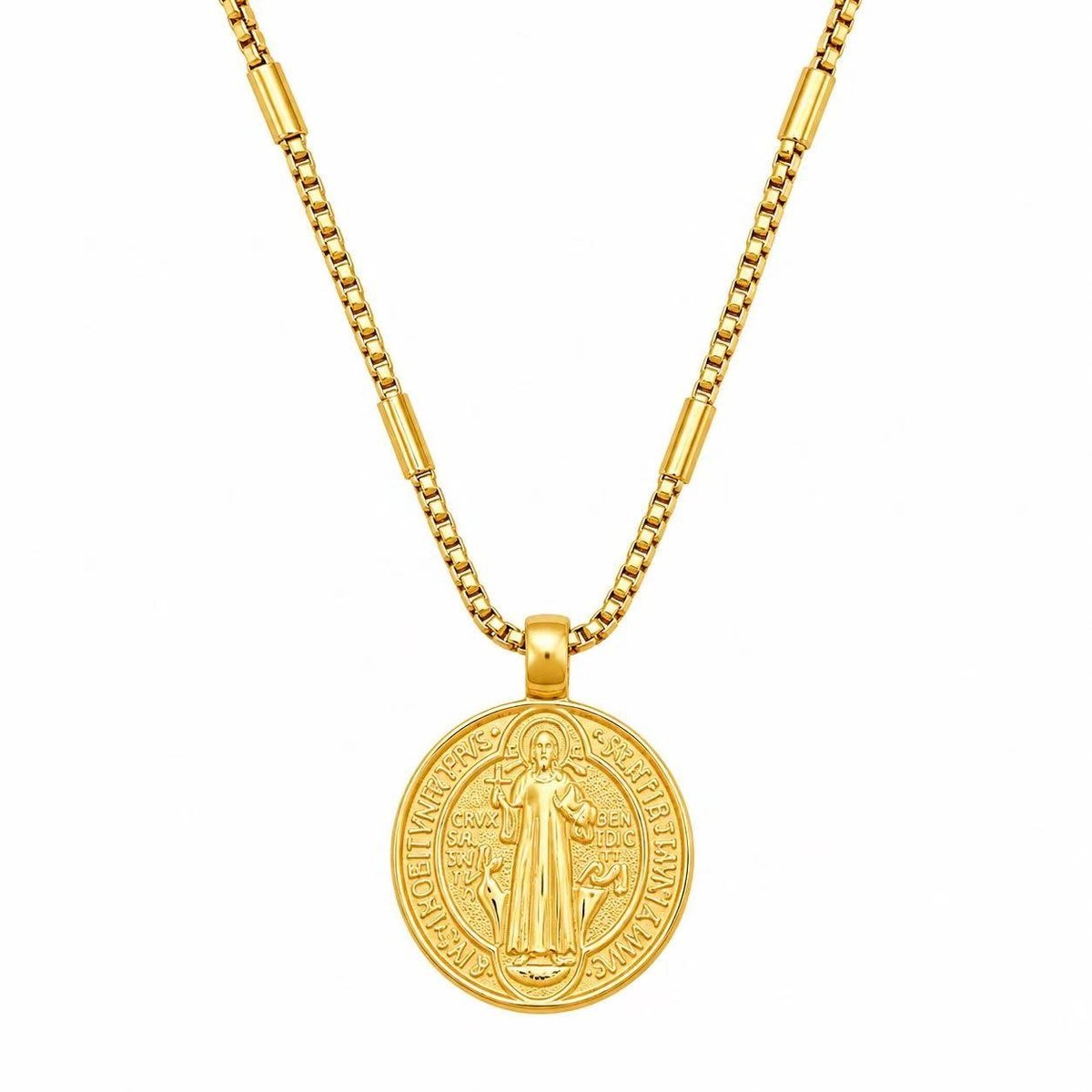
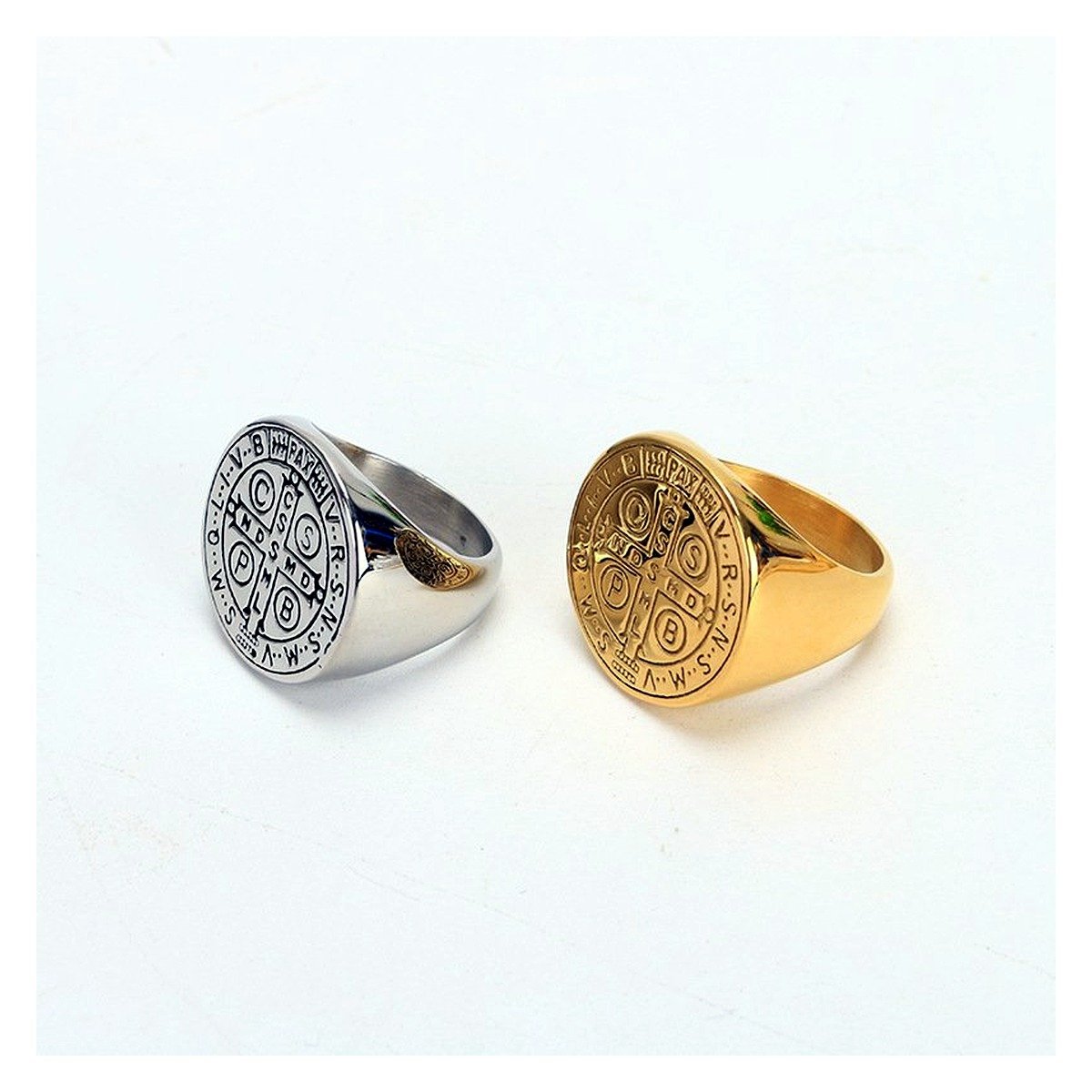
St. Benedict jewelry is an important Catholic product family, but its small letters and two-sided composition make it vulnerable to production errors. Do not approve it from a distant front-view image alone.
Request high-resolution artwork or photographs of both sides. Confirm the central figures, cross, initials, outer inscriptions, orientation and the relationship between the medal and any surrounding ring or cross. The buyer should supply or approve the exact reference used for production; the factory should not reconstruct unclear letters from a compressed marketplace image.
The St. Benedict medal and Virgin Mary pendant necklace shows why front/back review and component pairing matter. For ring programs, compare a Saint Benedict cross ring with the broader St. Benedict stainless steel ring set to decide whether the range needs one hero design or several coordinated formats.
Distinguish a Cross From a Crucifix in the Specification
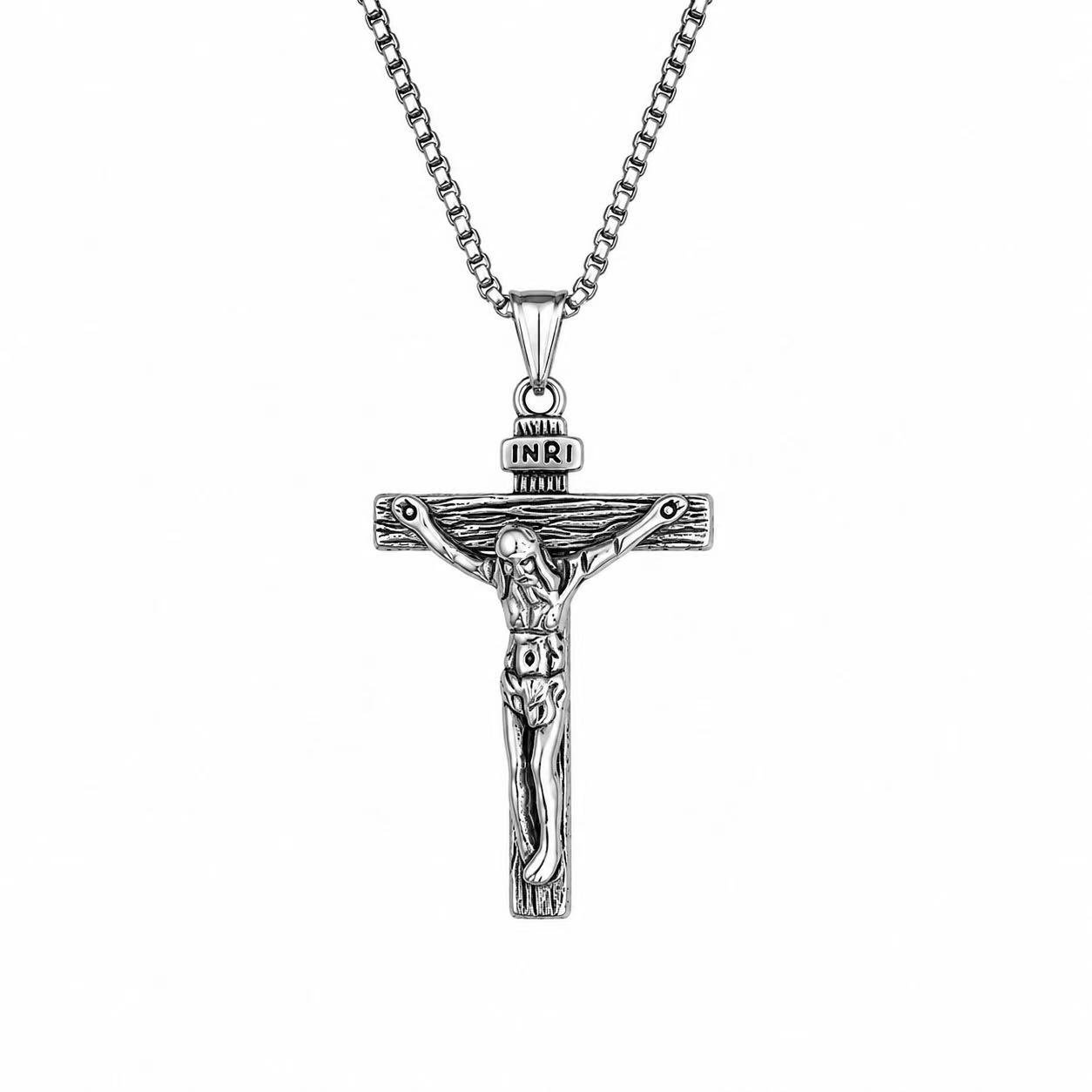
A product title and the physical design must agree. A cross without the figure of Jesus should not be described as a crucifix. For a crucifix pendant, approve the cross proportions, figure placement, relief depth, attachment method and rear finish.
Small relief features can lose definition during polishing or plating. Specify which details must remain visible after finishing, not only in the raw casting or sample artwork. Check edges, undercuts and contact points that could feel sharp or collect polishing residue.
Use the Jesus crucifix stainless steel pendant as a product reference, and consult the wholesale stainless steel cross pendant guide for chain, bail, finish and pendant-specific purchasing decisions.
Review Marian Images and Inscriptions at Production Scale
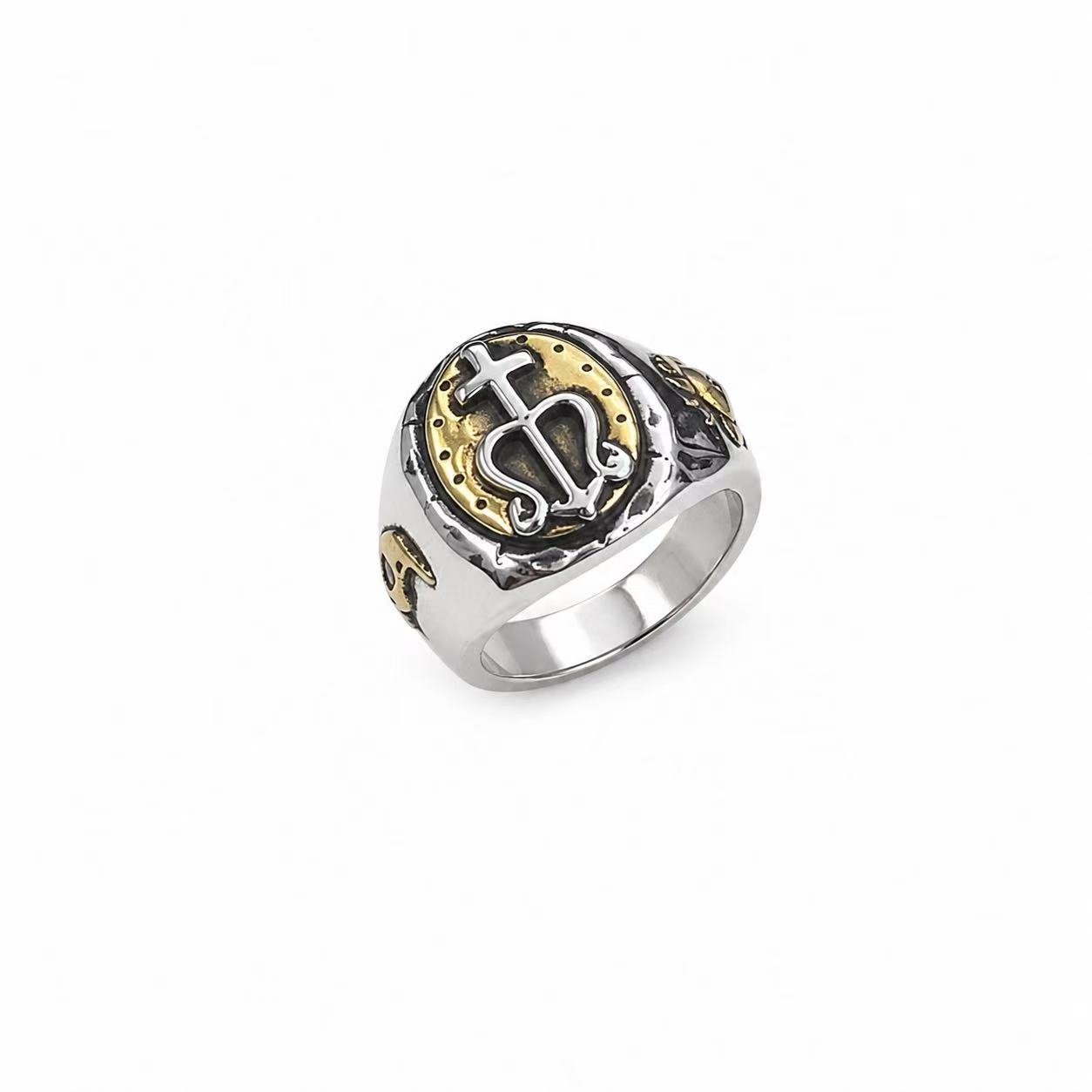
Marian jewelry may use an image, monogram, medal, cross combination or inscription. The buyer should identify the exact design requested and approve a production-size rendering. A detail that looks clear on enlarged artwork may become unreadable on a small ring top or pendant.
Check facial and garment detail, surrounding rays or borders, monograms, letter spacing and reverse-side content. If enamel, stones or contrasting plating are used, define the color reference and boundaries. Do not use a generic product name when the actual image is intended to represent a specific Marian devotion.
The Marian Cross M stainless steel ring is a useful example for evaluating how a symbol translates into a wearable ring surface. The approved sample should record top dimensions, relief, finish, internal size and the orientation of every element.
Treat Saint and Archangel Pieces as Identifiable Products
For a saint or archangel design, the buyer should approve the identity, pose, attributes, border text and product title together. Avoid naming a figure only from a supplier’s informal filename. When the source image is ambiguous, request confirmation before publishing the product or packaging.
St. Michael products can appear as medals, dog tags, rings, pendants or guardian-bell formats. Compare the intended channel before placing them in one collection. A religious gift retailer may require different copy and packaging from a motorcycle-accessory distributor even when both products reference St. Michael.
Relevant product examples include the St. Michael dog-tag pendant and St. Michael guardian-bell pendant. Their category, use context, dimensions and packaging should remain explicit in the quotation.
Specify Stainless Steel and Every Connected Component
Do not let “stainless steel Catholic jewelry” stand as the entire material specification. State the steel grade requested for the main body and identify the materials used for chains, clasps, jump rings, stones, enamel and other components. A pendant and its supplied chain may not automatically share the same grade or finish process.
For each SKU, record:
- Main-body material and construction
- Finished dimensions and weight tolerance
- Ring size or chain length and width
- Bail opening and chain end-component dimensions
- Clasp and jump-ring construction
- Surface polish, texture and plating color
- Stone, enamel or oxidized-detail requirements
- Logo, hallmark or internal engraving
Material names alone do not prove finished-product compliance. Define verification and testing according to the destination market and buyer requirements. GZN’s RSL and jewelry compliance guide can be used when planning the restricted-substance scope.
Control Relief, Oxidation and PVD Color
Catholic medals and rings often combine raised relief, recessed details and contrasting dark areas. Approve the finishing sequence, because polishing after oxidation or plating can change the appearance of fine letters and borders.
Use a physical approved sample as the primary visual standard. Photograph it under consistent lighting and record whether recessed areas should be darkened, polished, matte or left in the base color. For gold or black PVD, define the color reference, gloss level and areas requiring coverage. Review the PVD gold stainless steel jewelry guide before approving color variants.
Each additional finish creates another SKU and another batch-control requirement. Add silver, gold, black or two-tone versions only when the sales channel can support separate inventory and the buyer is prepared to approve each version.
Plan Ring Sizes, Pendant Chains and Gift Sets
Ring programs need a size distribution, not merely a total quantity. Use previous sales data when available. For a new market, begin with a controlled size mix and track sales by exact size. Confirm whether mixed sizes are permitted within the supplier’s quoted MOQ and how replacements or reorders will be packed.
Pendant programs should specify whether the quotation is for the pendant only or a complete necklace. Check the bail opening against the chain width and end components, not only the nominal chain size. Record chain style, length, width, clasp and finished weight.
For gift sets, identify which components must remain together during production, inspection and packing. A medal, chain, card and box may be sourced from different production batches, so the purchase order needs one final assembly and labeling standard.
Use Samples to Verify Meaning and Manufacturability
Sampling has two jobs: confirm the design identity and confirm that the item can be manufactured consistently. The approval set should include the most detailed medal, the smallest inscriptions, each meaningful finish, the widest and narrowest ring sizes, and at least one complete pendant-and-chain combination.
Inspect samples against a written checklist. Record actual dimensions, weight, ring size, chain length, relief, spelling, symbol orientation, color, logo and packaging. Assign a sample code or version date. When a drawing, inscription or component changes, issue a new approval record rather than relying on messages scattered across email or chat.
For custom development, GZN’s OEM and ODM manufacturing service explains the broader design-to-production route. Buyers should also confirm that they have permission to use any modern copyrighted artwork, brand mark or commissioned image supplied for reproduction.
Understand MOQ and Quotation Assumptions
There is no responsible universal MOQ for every Catholic jewelry project. Ready-stock products, stock designs with a private label, custom engraving and new molded designs have different requirements. Plating batches, ring-size distribution, custom packaging and the number of finishes can also affect the practical minimum.
Ask the supplier to separate:
- Stock-product MOQ and available variants
- Logo or engraving MOQ
- CAD, tooling or mold charges
- Sample cost and sample delivery
- Unit price by realistic quantity tier
- Plating, stones or enamel cost assumptions
- Packaging and labeling charges
- Inspection and testing assumptions
- Trade term and destination
Avoid opening too many low-volume variants merely to make the catalog look broad. A disciplined first order creates clearer evidence for the next purchase.
Create a Catholic Jewelry QC Checklist
General scratch inspection is not enough for symbol-rich jewelry. The QC plan should combine normal jewelry checks with design-specific checks.
| QC area | What to verify |
|---|---|
| Design identity | Correct approved symbol, figure, attributes and product name |
| Text and initials | Spelling, sequence, orientation and production-scale legibility |
| Relief | Required details remain visible after polish, oxidation or plating |
| Dimensions | Ring size, top size, medal diameter, thickness and bail opening |
| Assembly | Chain compatibility, jump rings, clasp, stones and enamel |
| Surface | Scratches, pits, residue, sharp edges and consistent color |
| Packaging | Correct SKU, size, language, barcode and component set |
Define inspection checkpoints before bulk production and retain an approved sample for comparison. GZN’s factory tour and quality-control process provides additional factory and inspection context.
Package and Describe the Products Responsibly
Packaging should protect relief details and make each variant easy to identify. Labels may need the product name, SKU, ring size, chain length, finish, barcode, country-of-origin information and destination-language copy.
Keep commercial claims factual. A factory can describe the material, dimensions, finish, symbol shown and customization service. It should not claim that a product is blessed, officially approved by a church authority, guaranteed to protect the wearer or able to produce a spiritual result. If a retailer arranges blessing or religious distribution separately, that is outside the manufacturing claim.
Use accurate product photography showing the front, back, side, clasp, bail and scale. Enlarged detail images are useful, but the page should also show the real finished product at normal proportions.
Build the First Order for Reorder Learning
Separate core SKUs from test SKUs. Core items can receive deeper quantities because they match established demand or a proven price point. Test items should answer one commercial question, such as whether customers prefer a medal pendant or ring, polished steel or gold PVD, or a pendant-only offer versus a complete necklace.
Track sales and remaining inventory by product family, exact design, size, finish and chain option. Use the same SKU structure in the quotation, purchase order, packaging and sales report. At the review date, classify each variant as reorder, adjust or discontinue and send the revised mix to the supplier.
RFQ Checklist for Catholic Jewelry Wholesale
Send a structured request instead of a folder of unexplained images:
- Destination market, language and retail channel
- Product family and approved design identity
- Reference artwork or product links
- Material, dimensions, weight and construction
- Ring sizes or chain specifications
- Finish, relief, oxidation, stones and enamel
- Quantity by SKU and variant
- Sample and approval requirements
- Logo, packaging, barcode and label copy
- Testing, trade term, destination and schedule
Ask the supplier to list missing information and assumptions. A quotation based only on a small reference image should be treated as preliminary.
Frequently Asked Questions
What should a first Catholic jewelry collection include?
Choose a focused set that matches the retailer’s customers. Crosses or crucifixes, St. Benedict pieces and one Marian or saint family can create a coherent test range without spreading the opening quantity across too many SKUs.
Is a cross the same as a crucifix for product naming?
No. A crucifix includes the figure of Jesus, while a plain cross does not. The title, approved artwork and finished product should match.
What must be checked on a St. Benedict medal?
Review both sides, the central figures, cross, letters, outer inscriptions, orientation, relief and legibility at the final production size.
Can Catholic and Orthodox designs share one product brief?
They should be separated when the symbol form, iconography, inscription or market presentation differs. Use an approved reference for each design rather than treating all Christian jewelry as interchangeable.
Can the factory say that a product is blessed?
Not unless a documented religious process outside normal manufacturing has actually occurred and the responsible organization authorizes that claim. Standard factory descriptions should remain factual and should not promise spiritual effects.
What information produces a reliable wholesale quote?
Provide approved design references, dimensions, material, finish, variants, quantities, sample requirements, packaging, testing needs, destination and trade term.
Request a Catholic Jewelry Collection Review
Send your selected product families, reference artwork, quantities, ring sizes or chain specifications, finish options, packaging and destination through the GZN quotation page. The team can review missing production details and prepare a project-specific discussion for stock products, private label or OEM development.
Building a focused Catholic medal range? Review our St. Benedict and St. Michael wholesale buying guide for product identity, format, artwork, sample, MOQ, packaging and symbol-specific QC decisions.