
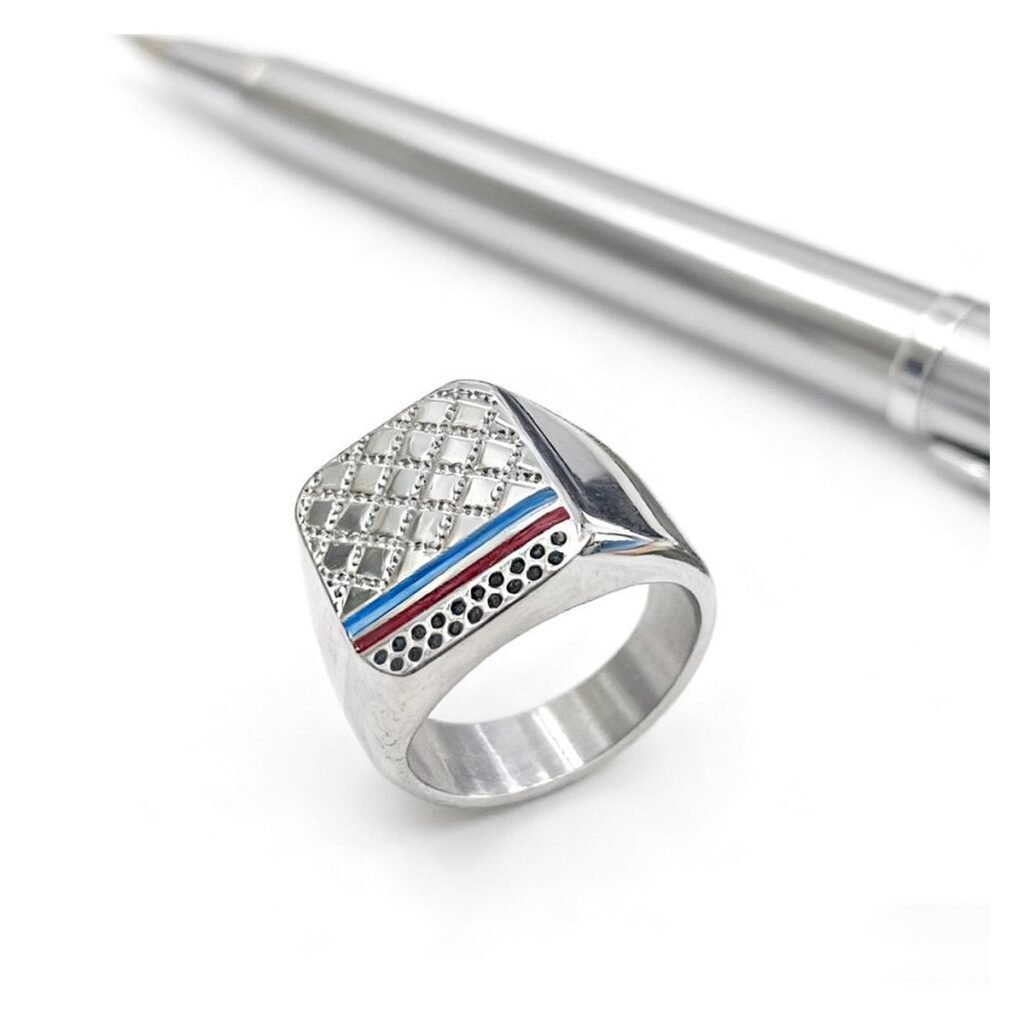
Building a profitable men's stainless steel jewelry wholesale range requires more than selecting a few strong-looking designs. Rings, pendants, chains and bracelets each create different sizing, weight, finish, packaging and inventory decisions. A collection can look impressive in supplier photos yet perform poorly if too many SKUs compete for the same customer, the ring size mix is wrong, or pendants arrive with chains that do not match their weight and bail opening.
This guide gives wholesalers, importers, private-label brands and retail buyers a practical framework for planning a men’s stainless steel jewelry assortment. It focuses on specifications and approval controls rather than unverified trend claims or a universal MOQ.
Define the Buyer and Sales Channel Before Choosing Styles
Start with the customer, not the catalog. A motorcycle store, religious gift shop, streetwear retailer, online fashion brand and general jewelry wholesaler may all buy men’s stainless steel jewelry, but they do not need the same assortment.
Write a short commercial brief before requesting quotations:
- Target country and sales channel
- Core customer age and style preference
- Expected retail price bands
- Categories already selling in the range
- Preferred silver, gold, black or mixed finishes
- Need for stock designs, custom designs or both
- Required packaging, barcode and private-label presentation
- First-order quantity and realistic repeat-order plan
This brief helps a supplier distinguish between a focused collection and a random product list. Buyers can review GZN’s men's stainless steel rings, men's pendants, stainless steel necklaces and stainless steel bracelets as separate category references before building the first RFQ.
Give Every Category a Commercial Role
A balanced range does not require equal quantities of every category. Each category should have a clear job.
| Category | Commercial role | Main buying controls |
|---|---|---|
| Rings | Strong visual identity and repeatable style families | Size mix, inner finish, width, weight and comfort |
| Pendants | Theme-led designs and giftable statements | Pendant weight, bail, chain compatibility and relief detail |
| Chains | Core repeat purchase and easy layering | Length, width, clasp, link construction and finish |
| Bracelets | Coordinated sets and higher basket value | Wrist length, clasp, link strength and matching chain style |
Use a core, supporting and test structure. Core items represent the brand’s clearest style and receive the broadest size or finish coverage. Supporting items create cross-selling combinations. Test items introduce new motifs or finishes in controlled quantities. This structure is more useful than giving every design the same opening quantity.
Keep the number of variations realistic. One design offered in several sizes, finishes and chain lengths can create many operational SKUs. Count the variations before approving the order, because labeling, packing, stock control and reordering all follow the SKU count, not just the number of designs.
Build Ring Families Instead of Isolated Designs
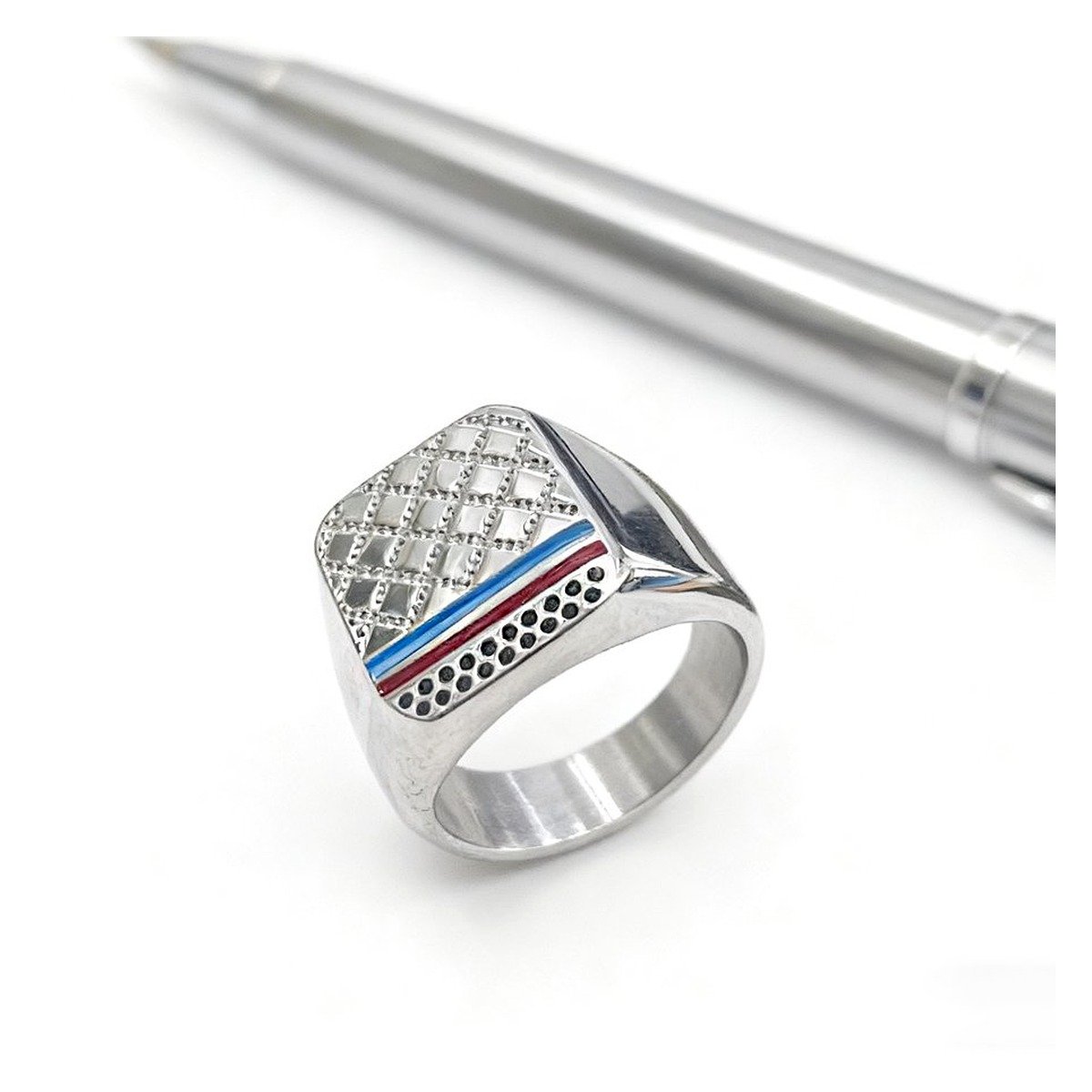
Men’s rings usually create the most complex size planning. A buyer should separate bands, signet rings and sculptural statement rings because width, top weight and customer fit differ.
A practical ring family can contain a restrained entry design, a recognizable mid-level signet and a higher-impact statement piece. Collections may then be grouped by a real audience, such as the skull and biker ring range or Masonic rings, rather than mixing unrelated motifs under one campaign.
For every ring, confirm:
- Sizing standard used in production
- Finished internal diameter or circumference
- Available and ordered size distribution
- Band width and maximum top dimensions
- Actual sample weight
- Interior polish and edge comfort
- Stone, enamel or inlay security, where applicable
- Logo position and orientation
Do not copy one size ratio to every market without sales evidence. If historical data is unavailable, start with a controlled size mix, record sell-through by size and use the first reorder to correct the distribution. The detailed men's stainless steel rings wholesale guide explains size and inspection decisions for ring programs.
Treat Pendant, Bail and Chain as One Product System
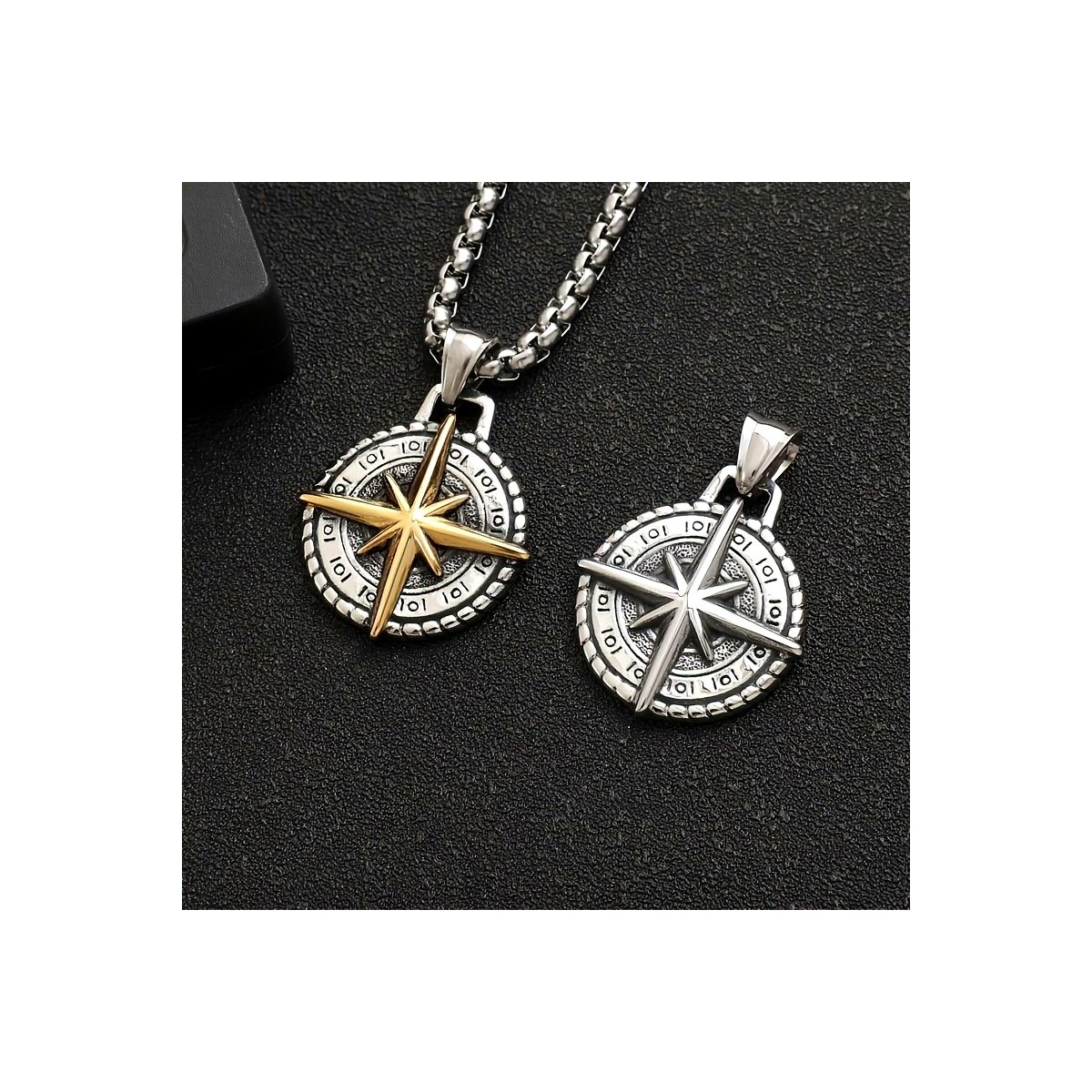
A pendant should not be sourced independently from its chain when the final product is sold as a necklace. Weight, bail opening, chain width, end caps, jump rings and clasp all affect appearance and function.
Approve the pendant dimensions both with and without the bail. Record the bail’s internal height and width and confirm that the production chain’s end component can pass through it. A heavy sculptural pendant on a light chain can feel unbalanced; a wide chain may not fit the approved bail even when both components look suitable in separate photos.
The St. Michael guardian bell pendant illustrates a design where front relief, back detail, assembled parts and finished weight should be reviewed together. Buyers developing private-label pendants can also use the custom stainless steel pendant manufacturer guide for drawing, sample and QC requirements.
When selling pendant-only and complete-necklace versions, create separate SKUs and packaging instructions. Do not allow the packing team to choose a chain based only on visual similarity.
Specify Chain Length, Width and Construction
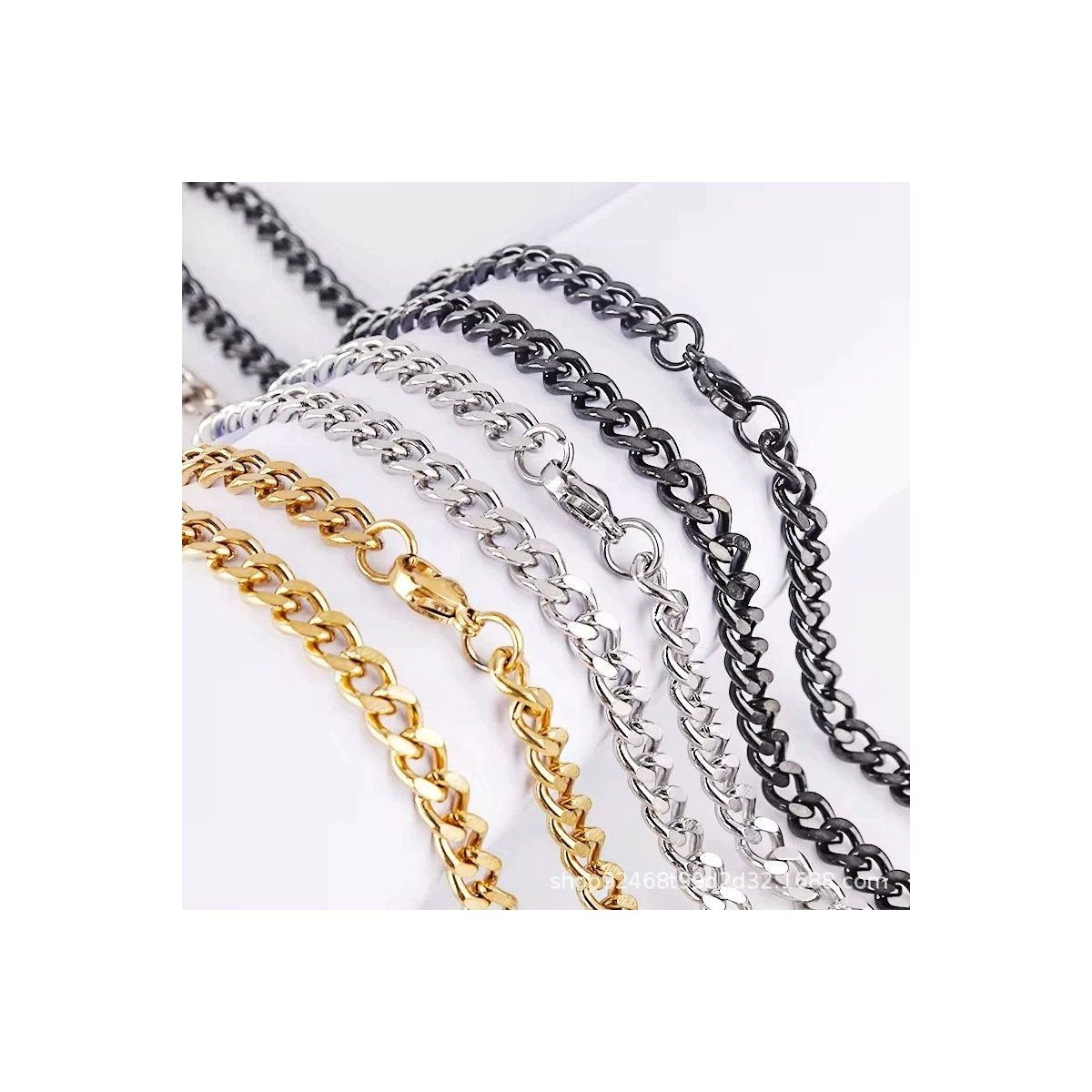
Chain names are not complete specifications. Two suppliers may use the same description for links with different wire thickness, proportions or finishing. Record actual dimensions and approve a physical sample.
For men’s chains, check:
- Finished length and permitted tolerance
- Link width, thickness and construction
- Solid or hollow construction where relevant
- Clasp type, dimensions and function
- Jump-ring closure and soldering requirement
- Surface finish and plating reference
- Actual finished weight
- Matching bracelet option, if sold as a set
The multi-width Cuban chain necklace is an example of why width and length combinations should be managed as explicit variants. The broader chain necklace sourcing guide covers length, finish and MOQ planning in more detail.
Use Style Segments Without Overloading the Range
Men’s jewelry buyers often organize products around recognizable style segments: minimal bands and chains, religious motifs, biker and skull designs, Masonic symbols, Viking-inspired pieces, or streetwear forms. A clear segment makes product photography, navigation and advertising more coherent.
Avoid adding every available motif merely because the supplier has it. Check whether each design serves the defined customer and whether it adds a new role to the assortment. Three similar skull rings may divide demand rather than increase it. One strong skull signet, one detailed statement ring and one coordinated pendant may create a more useful test group.
The same discipline applies to finish. Silver, gold, black and two-tone versions should be approved because the customer needs them, not because every color is technically available. Each additional finish creates another SKU and another color-control requirement.
Confirm Material and Finish Claims
Ask the supplier to state the stainless steel grade for the pendant body, ring, chain, clasp and other relevant components. Do not assume every component uses the same material because the finished item is described as stainless steel jewelry.
Many B2B programs specify 316L, but the grade name alone does not prove the finished product’s compliance or durability. Agree how material is verified and define testing according to the destination market and buyer requirements. Avoid unsupported absolute claims such as allergy-free.
For PVD gold, black or other plated finishes, approve a physical color reference under consistent lighting. Record the base polish, gloss level and areas that should remain unplated. The PVD gold stainless steel jewelry wholesale guide provides a practical approval framework for color and batch comparison.
Plan Samples in Commercial Combinations
Sampling should test the range as it will be sold. Ordering one ring, one pendant and one chain without checking their relationship may confirm individual quality but miss collection-level problems.
Build a sample set that includes:
- The highest-priority core design
- The most complex relief, stone or enamel design
- The widest and narrowest ring or chain variants
- Each finish that will be ordered in meaningful volume
- A complete pendant-and-chain combination
- Final packaging for at least one representative SKU
Record actual dimensions, weight, color, logo and packaging against the specification. Photograph the approved samples and assign a version or sample code. If the bulk order changes a component, finish or measurement, update the approval record instead of relying on chat history.
Understand MOQ and Cost Drivers
There is no responsible universal MOQ for every men’s stainless steel jewelry order. Stock designs, custom logo orders and fully new molded designs have different thresholds. The practical MOQ may also be affected by plating batches, ring size distribution, stone or enamel colors, packaging and the number of variations.
Ask the quotation to separate:
- Development, CAD, tooling or mold charges
- Sample cost and sample shipping
- Unit price by realistic quantity tier
- Price effect of material, weight and finish
- Logo and private-label packaging charges
- Inspection or testing assumptions
- Trade term and delivery location
Avoid increasing the SKU count merely to reach a nominal order total. A smaller, clearer assortment often produces better reorder evidence than a large opening order spread across too many variations. Discuss project-specific options through GZN’s OEM and ODM manufacturing service.
Create a Category-Specific QC Plan
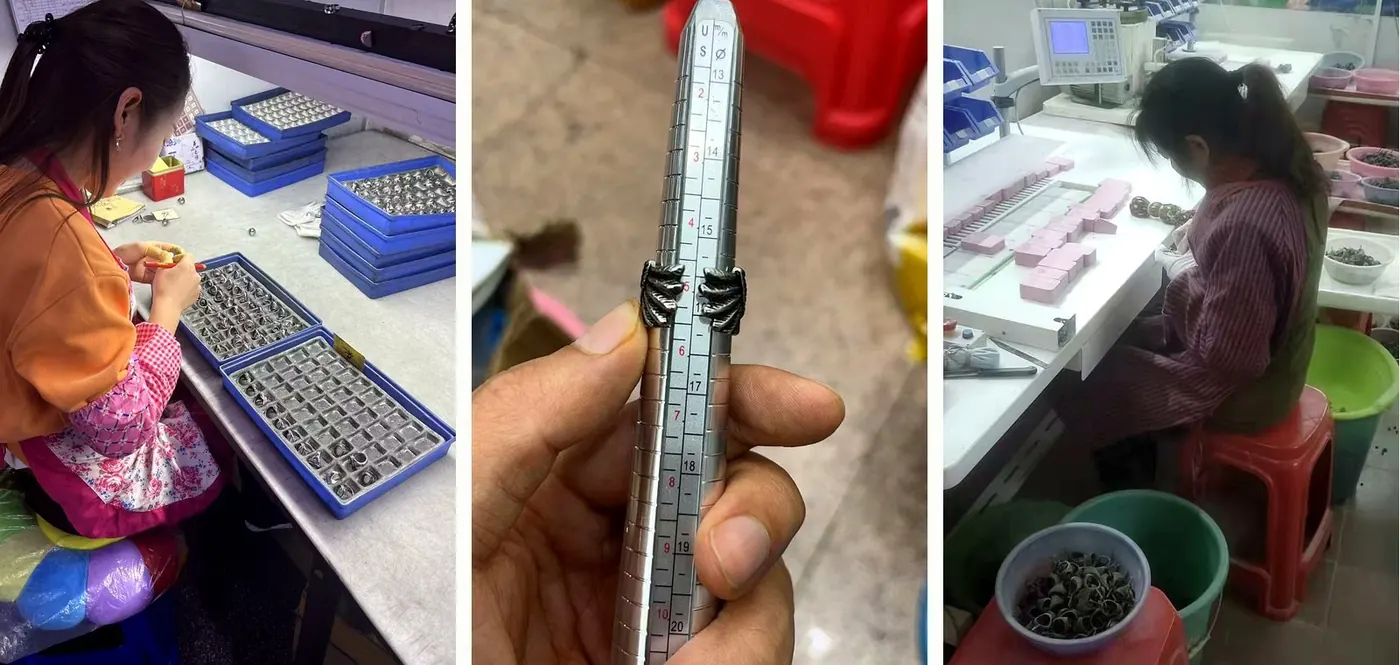
One general visual inspection checklist is not enough for rings, chains, pendants and bracelets. The approved sample remains the visual standard, but measurable checks should match each category.
| QC area | Rings | Pendants | Chains and bracelets |
|---|---|---|---|
| Dimensions | Internal size, width, top dimensions | Body, thickness and bail opening | Length, width, link and clasp dimensions |
| Weight | Per size or approved reference size | Pendant-only and complete necklace | Finished chain or bracelet |
| Function | Comfort and stone security | Bail alignment and assembly | Clasp, jump rings and articulation |
| Surface | Interior, edges and top detail | Front, back and recessed areas | Link contact points and consistent finish |
| Packing | Correct size label | Correct chain and pendant SKU | Correct length, width and set pairing |
Also inspect scratches, pits, sharp edges, polishing residue, color consistency, logo legibility and barcode accuracy. Review GZN’s factory tour and quality-control process when defining checkpoints. For restricted-substance requirements, plan the test scope before production using the RSL and jewelry compliance guide.
Build the First Order Around Reorder Evidence
The first wholesale order should create useful sales evidence, not merely fill a catalog. Set a review period before ordering and decide which data will determine the second purchase. At minimum, track sales and remaining stock by category, design, size, length and finish. A ring recorded only as “sold” cannot tell the buyer which size to replenish; a chain recorded without width and length cannot guide the next variant mix.
Separate core products from test products in the opening order. Core products can receive deeper quantities because they match proven customer demand or an established price point. Test products should be limited to a clear question, such as whether black PVD performs better than polished steel or whether a 60 cm chain fits the target channel better than a 50 cm option. Avoid testing several design, finish and price changes in the same SKU group because the result becomes difficult to interpret.
Use the same SKU structure in the supplier quotation, purchase order, warehouse record and sales report. After the review period, classify each variant as reorder, adjust or discontinue. Share the revised size and finish distribution with the supplier before the next production plan. This turns assortment development into a repeatable buying process and helps prevent slow-moving variations from consuming the budget needed for proven items.
Package the Range for Reordering
Wholesale packaging should protect the item and make identification easy. A visually attractive package that hides the size, finish or chain length can create warehouse errors.
Confirm the product name, SKU, ring size, finish, chain length, barcode and quantity on the applicable label. For sets, state whether components must remain together during packing and inspection. If private-label packaging has several language versions, control the artwork file and destination market in the purchase order.
Create a reorder sheet that uses the same SKU names as the product, label, carton and invoice. Consistent naming reduces mistakes when buyers reorder only selected sizes or finishes.
RFQ Checklist for a Men’s Stainless Steel Jewelry Collection
Send the same structured brief to every shortlisted supplier:
- Target market, channel and customer segment
- Product links, drawings or reference images
- Category and SKU list with expected quantities
- Ring sizes, chain lengths, widths and bracelet lengths
- Material grade and component requirements
- Finish, color, stones, enamel and logo details
- Sample and approval requirements
- Packaging, barcode and private-label artwork
- Compliance or testing requirements
- Trade term, destination and target schedule
Ask the supplier to identify missing information and quotation assumptions. A price based on an incomplete photo should be treated as an estimate, not as a final production agreement.
Frequently Asked Questions
Should the first order include every men’s jewelry category?
No. Select categories that fit the customer and sales channel. A focused ring-and-pendant range may be more coherent than a broad collection with too few units behind each SKU.
How many ring sizes should I order?
Use historical size sales when available. Without data, start with a controlled distribution, track sell-through by size and adjust the reorder. Do not assume one market’s ratio applies everywhere.
Can one chain be used for every pendant?
Not safely. Check pendant weight, bail opening, chain width, end components and visual balance for each approved combination.
Should every design be offered in silver, gold and black?
Only when the variants serve the target customer and can justify separate inventory. Each finish needs its own sample, SKU and color-control standard.
What information is required for a reliable quote?
Provide design references, dimensions, material, finish, variants, quantities, packaging, testing needs, destination and trade term. Ask the supplier to list assumptions and one-time charges separately.
Request a Collection Review
Send your target categories, product links, expected quantities, size and length requirements, finish choices, packaging and destination through the GZN quotation page. The team can identify missing specifications and prepare a project-specific discussion for stock, logo customization or OEM development.