
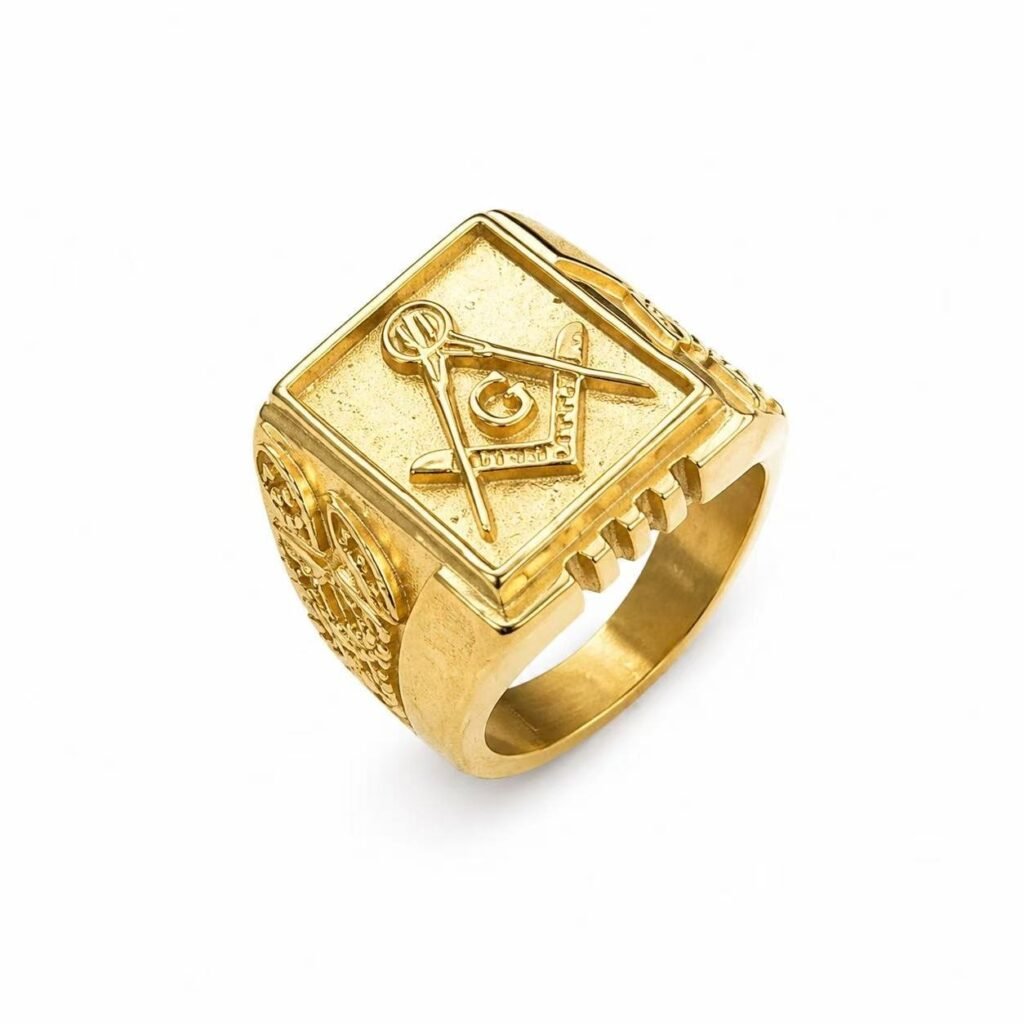
Stainless steel Masonic rings wholesale buying is not only a matter of choosing a square-and-compasses image from a catalog. A reliable purchase order must define which symbol is approved, how it will be reproduced on the ring face, what steel and finish are required, which sizes will be supplied, and how the finished pieces will be inspected.
This guide is for lodge-supply distributors, fraternal retailers, jewelry wholesalers, private-label brands and sourcing teams. It focuses on commercial product development and quality control. It does not provide ritual instruction or claim that one design represents every Masonic jurisdiction. Buyers should confirm the terminology, artwork rights and local requirements that apply to their own market before production.
For a quick view of current styles, begin with the Masonic rings wholesale collection. Use the guide below to turn a visual preference into a specification that a factory, inspector and buyer can all follow.
Define the Buyer and Retail Channel First
A lodge-supply distributor, a men’s fashion retailer and a custom membership program can all order Masonic-inspired rings, but they do not need the same assortment. The sales channel should determine the depth of symbolism, packaging, size coverage and level of customization.
Before requesting a quote, state:
- The destination country and intended retail channel.
- Whether the order uses factory stock designs, authorized customer artwork or a new custom design.
- The expected retail price band and target order quantity.
- Whether the rings are for open retail, an organization-specific program or private-label resale.
- The required delivery date, packing format and shipping term.
This information helps separate a standard wholesale order from a project that needs new artwork, tooling, engraving, special packing or additional approval steps.
Separate Stock Designs from Authorized Custom Artwork
Stock designs and custom designs should follow different quotation paths. A stock item may already have an established mold, finish and size range. A custom program may require artwork cleanup, a new model, tooling, samples and written approval before bulk production.
Do not send a low-resolution screenshot and assume it is a production file. For custom work, provide vector artwork when possible and identify every element that must remain unchanged. If letters, dates, lodge names, numbers or borders are required, specify their position and minimum readable size.
The buyer is responsible for confirming that supplied logos, emblems and organization-specific marks may be manufactured and sold in the intended market. A factory quotation is not legal clearance or permission to use a symbol. Put the approved artwork version and authorization responsibility in the purchase record.
Approve the Symbol at Finished Ring Size

The square-and-compasses motif is common in Masonic jewelry, but its execution varies. Some designs include a central letter, stones, enamel, textured fields, geometric borders or additional side details. The buyer should approve what is actually shown rather than relying on a broad product name.
The Masonic compass stainless steel signet ring provides a useful example. A buyer should inspect the angle and symmetry of the central geometry, the separation between raised and recessed areas, the legibility of the central element and the relationship between the emblem and the ring face.
Approval should be based on the production-size sample. A large rendering can hide problems that become obvious on a ring: narrow gaps may fill during casting, shallow relief may disappear after polishing, and small lettering may lose definition after plating. Ask for a close image with dimensions and, for custom work, approve a physical sample before bulk production.
Choose the Ring Architecture, Not Only the Front Image

Two rings with similar front symbols can perform differently because of their construction. The product brief should identify the full architecture:
- Signet, band, spinner, stone-set or sculptural form.
- Face width, face height and top profile.
- Shank width, shank thickness and inside profile.
- Solid, recessed or partially hollow construction.
- Comfort-fit or standard inside edge.
- Approximate unit weight and permitted production tolerance.
The Masonic checkerboard stainless steel signet ring combines a central emblem with a patterned field. The buyer must approve both the emblem and the surrounding texture because polishing, blackening and plating can change the contrast between them.
For a more dimensional option, the two-tone Masonic emblem stainless steel ring should be evaluated for attachment security, finish boundaries, edge smoothness and consistency between the central feature and the base ring.
Confirm the Steel Grade by Component
Do not use “stainless steel” as the complete material specification. State the requested grade for the ring body and identify any separate emblem, stone, inlay or decorative component.
316L is often selected for stainless steel jewelry, but the purchase order should still name it explicitly when required. If a listed product uses another grade, the quotation and sample approval should reflect that rather than silently replacing the specification. Buyers comparing material options can review the 316L vs 304 stainless steel jewelry guide.
Material declarations should match the exact product and components being ordered. A general factory statement is not a substitute for a product-level specification. Where a buyer requires restricted-substance documentation or market-specific testing, define the product scope, test method and destination requirements before placing the bulk order. GZN’s RSL testing and jewelry compliance page explains the available documentation context without claiming that one report covers every product.
Build a Commercial Finish Matrix

Masonic rings often depend on strong contrast. High-polish steel, antique black recesses, gold color, black coating, two-tone combinations and stone accents can create very different retail programs even when the base motif is similar.
Use a finish matrix rather than a vague request for “gold” or “vintage”:
| Decision | What the buyer should approve |
|---|---|
| Base appearance | Silver color, gold color, black, two-tone or antique treatment |
| Surface | High polish, brushed, sandblasted, textured or mixed |
| Recess contrast | Blackened, unfilled, enamel-filled or another approved treatment |
| Plating scope | Whole ring, selected surfaces or separate component only |
| Color target | Approved sample or agreed color reference under consistent lighting |
| Wear expectations | Intended use, care instructions and any requested test method |
The gold Masonic compass stainless steel signet ring is a practical reference for a gold-color program. The quotation should clarify whether the color process applies to the complete ring, how recessed details are treated and whether multiple production batches must match an approved sample.
For gold-color or black programs, do not promise universal wear life. Coating performance depends on the process, surface preparation, thickness, product geometry, use and exposure. Agree on the requested finish and test standard instead of relying on an unsupported durability slogan. The PVD gold stainless steel jewelry wholesale guide provides a broader plating and color-control checklist.
Create a Size Mix from Sales Logic
A ring order is not complete until the size distribution is defined. Ordering the same quantity of every size may create slow-moving inventory, but copying another retailer’s ratio can be equally risky. Use previous sales, customer demographics and channel data when available.
For a first order, separate three decisions:
- Which sizing standard will be used.
- Which sizes are available for each design.
- How many pieces of each design, finish and size will be ordered.
The size should be measured after the relevant finishing process, and the factory should confirm the permitted tolerance. A thick signet profile can feel different from a narrow band even at the same nominal size, so a physical sample is valuable for new constructions.
Create the purchase order at SKU level. “100 Masonic rings, mixed sizes” is not sufficient. A usable line identifies design, finish, size and quantity. The men's stainless steel rings wholesale guide explains broader size-mix and ring-assortment planning.
Decide Whether Stones or Moving Parts Belong in the Range
Stone-set and spinner constructions can widen a collection, but they also add inspection points. The Masonic glass stone spinner ring combines visual and mechanical elements that should be specified separately.
For a stone or glass component, approve:
- Material description, color and visible size.
- Setting or attachment method.
- Alignment and permitted color variation.
- Edge condition and resistance to normal handling.
For a spinner or moving element, approve the intended movement, clearance, noise and security. The part should rotate as specified without excessive looseness, sharp contact points or detachment. A sample should be tested in the same finish and construction planned for production.
Plan the Assortment Around Product Families
A wholesale range is easier to reorder when it is organized into clear families. Instead of collecting unrelated rings, build a controlled assortment:
- Core square-and-compasses signet rings in silver and antique finishes.
- Gold-color or two-tone variants for a higher-contrast presentation.
- Patterned or checkerboard designs for visual variety.
- Stone-set or spinner designs as a smaller test group.
- Authorized custom-logo products for organization-specific programs.
Keep each design’s role clear. A new finish is not automatically a new design, and a new symbol is not automatically an acceptable variant. Product naming, SKU structure and photographs should allow the buyer to trace every finished ring back to the approved sample.
The stainless steel signet rings wholesale collection can help compare face shapes and constructions beyond the Masonic category. For a wider men’s program, use the men's stainless steel jewelry wholesale guide to coordinate rings with pendants, chains and bracelets.
Treat MOQ as a Specification Question
There is no responsible universal MOQ for every Masonic ring project. The practical minimum depends on whether the buyer selects ready stock, an existing mold, a new finish, custom engraving, new tooling, custom packaging or several size and color combinations.
Ask the supplier to separate:
- Sample quantity and sample cost.
- MOQ per design.
- MOQ per finish or plating batch.
- Minimum quantity per size, if applicable.
- Tooling, model or artwork charges.
- Packaging MOQ and printing charges.
- Bulk production lead time after sample approval.
A low total quantity can still become operationally complex if it is divided across many designs, finishes and sizes. Request the MOQ matrix before reducing quantities. For fully custom projects, the custom stainless steel rings production checklist covers mold cost, samples and production gates.
Use a Written Sample Approval Record
The approved sample should be a control reference, not an informal photo in a chat history. Record the product code, drawing or artwork version, material, dimensions, weight, size, finish, color, engraving, stones, packing and approval date.
Photograph the sample from the front, both sides, top and inside. Include a scale or measurement record where relevant. If a requested revision changes the symbol, relief, dimensions, plating or structure, issue a new approval version. Do not allow several contradictory samples to remain “approved.”
The buyer should also define which differences are cosmetic and which are critical. A critical defect might include the wrong symbol, missing component, incorrect size, sharp edge or insecure stone. Minor acceptable variation should be described and supported by the approved sample rather than decided after shipment.
Create a Masonic Ring QC Checklist
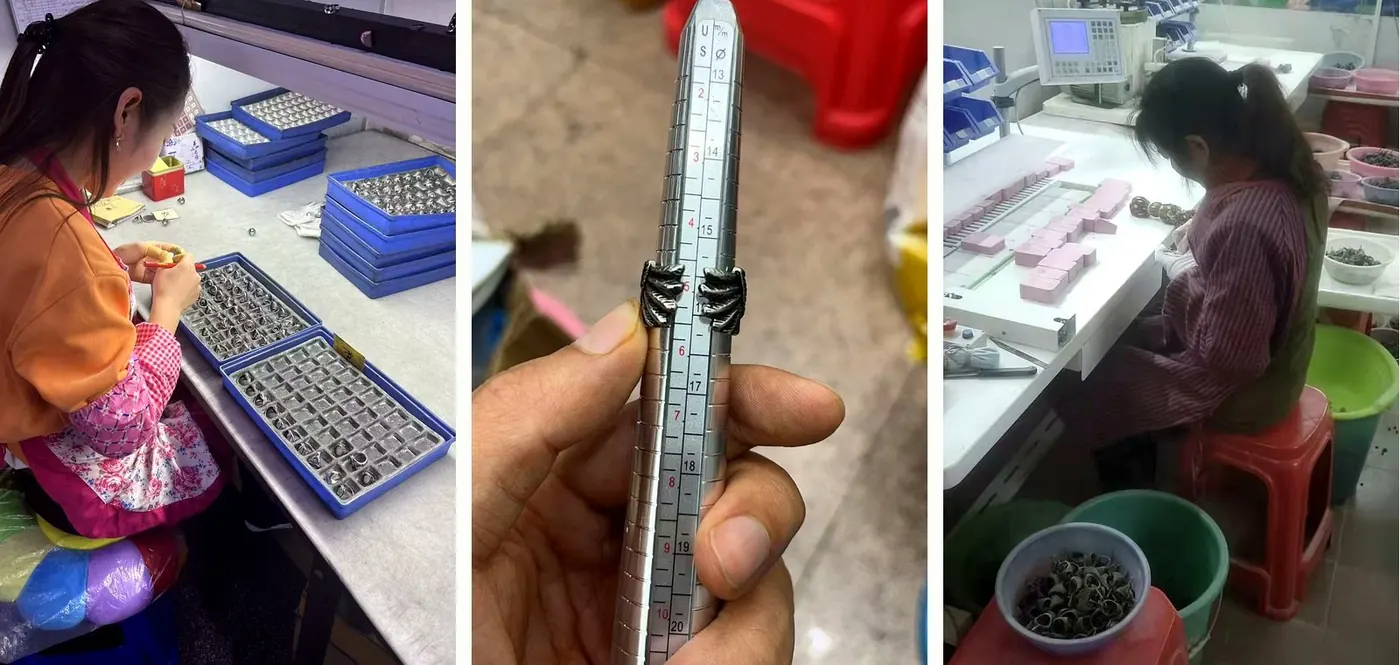
General ring inspection is necessary, but detailed emblems require additional controls. A useful QC checklist includes:
- Product code, design and size match the purchase order.
- The approved symbol and artwork version are used.
- Central geometry is aligned and complete.
- Letters, borders and recessed details remain legible.
- Face dimensions, shank dimensions and weight fall within agreed tolerances.
- Ring size is measured with the agreed standard.
- Polished surfaces are even and free from unacceptable pits, scratches or tool marks.
- Antique fill, enamel or blackened recesses are consistent and clean.
- Plating color and boundaries match the approved sample.
- Separate emblems, stones and moving parts are secure.
- Inside edges and contact surfaces are smooth.
- SKU labels, size labels and packaging match the item.
Inspection should use agreed sampling and defect rules. A few attractive photographs do not demonstrate that a bulk order has been checked. Buyers can review GZN’s factory tour and quality control process when preparing their own inspection requirements.
Prepare Packaging and Product Descriptions Carefully
Packaging can be simple or private label, but it should prevent scratches and size mix-ups. Decide whether each ring needs an individual bag, box, size label, barcode, care card or organization-specific insert. Confirm whether the quoted price includes the chosen packaging.
Product descriptions should identify the actual ring without presenting broad symbolic claims as universal facts. State the visible design, material specification, finish, dimensions and available sizes. Do not claim official endorsement by a lodge or organization unless the buyer has documented authorization.
For private-label work, provide the logo file, print color, placement, packaging dimensions, barcode data and approval proof. The private-label stainless steel rings preparation guide lists the information buyers should prepare before production.
Compare Quotations on the Same Scope
Two quotations are not comparable if one includes a complete ring, plating, mixed sizes and printed boxes while the other covers an unfinished base ring in one size. Create a comparison sheet using the same specification.
At minimum, compare:
- Product code and approved reference.
- Material by component.
- Dimensions, weight and construction.
- Finish and plating scope.
- Size range and quantity by size.
- Sample terms and tooling charges.
- Unit price at the same quantity.
- Packaging included in the price.
- Inspection standard and documentation.
- Production lead time and shipping term.
Use the OEM/ODM manufacturing services page when the project goes beyond stock wholesale products and requires design development, engraving or private-label execution.
RFQ Checklist for Stainless Steel Masonic Rings Wholesale
Send the following information for a useful factory quotation:
- Product links, reference photos or authorized artwork.
- Intended market and retail channel.
- Stock design, modified stock design or fully custom project.
- Required material grade by component.
- Ring construction and target dimensions.
- Finish, plating color and recessed-detail treatment.
- Size standard, size range and quantity by size.
- Stone, enamel, spinner or separate-emblem requirements.
- Sample quantity and required approval process.
- Bulk quantity per design and finish.
- Packaging, labels, barcode and private-label requirements.
- Required QC, testing or documentation scope.
- Destination, delivery deadline and preferred shipping term.
Frequently Asked Questions
Can one sample approve several finishes?
Not completely. One sample may approve the geometry and construction, but each finish can change color, contrast, edge definition and surface appearance. Approve the finishes that will actually be produced.
Should a first order include every available size?
Only when the retailer’s market data supports that range. Confirm available sizes, choose a practical opening mix and track sell-through by design, finish and size before reordering.
Can a factory reproduce an organization-specific logo from a photo?
A photo may support feasibility discussion, but production should use approved artwork and documented dimensions. The buyer must confirm the right to reproduce organization-specific marks.
Is 316L automatically confirmed for every part of a ring?
No. The purchase order should state the required material for the ring body and identify separate emblems, stones, inlays or other components. Confirm the material statement for the exact product being ordered.
What should be checked first on a bulk inspection?
Begin with product identity, symbol version, size, finish and quantity. Then inspect dimensions, surface quality, edge condition, component security, packaging and labels under the agreed sampling plan.
Request a Factory Quote
GZN Jewelry supplies stock and custom stainless steel ring programs for wholesale buyers. To evaluate a project, send the product links or authorized artwork, material and finish requirements, size mix, quantities, packaging and destination.
Use the contact page to request a quote. A complete brief allows the factory to separate stock-product pricing from custom development, confirm the practical MOQ and prepare the correct sample and QC plan.